The Piedmont Triad moves at a pace set by freight schedules and morning commutes, with I‑74 and US‑311 funneling a steady flow of trucks and family cars past High Point. Out on the rural stretches west toward Davidson County or south toward Randolph County, help can feel far away when a stone jumps the shoulder and knocks a crater into your windshield. The quiet of those roads is part of their charm, but it changes the equation when glass fails. Emergency auto glass in and around High Point needs to cover more than city blocks. It has to reach farm roads after dusk, shoulders without lights, and interchanges where traffic never really stops.
I have worked with drivers and dispatch teams in this corridor long enough to know the difference between an inconvenience and a hazard. A chip the size of a pencil eraser can wait until the afternoon. A spreading crack that is creeping across your line of sight on Highway 68 is another story. This article unpacks what matters for drivers who need fast help on rural routes and highways near High Point, how mobile glass service fits into that reality, and what decisions to make when every choice has a trade‑off. If you need the short version: stay safe first, call a pro who understands the terrain, and treat temporary fixes as exactly that, temporary.
What breaks, and why the location changes everything
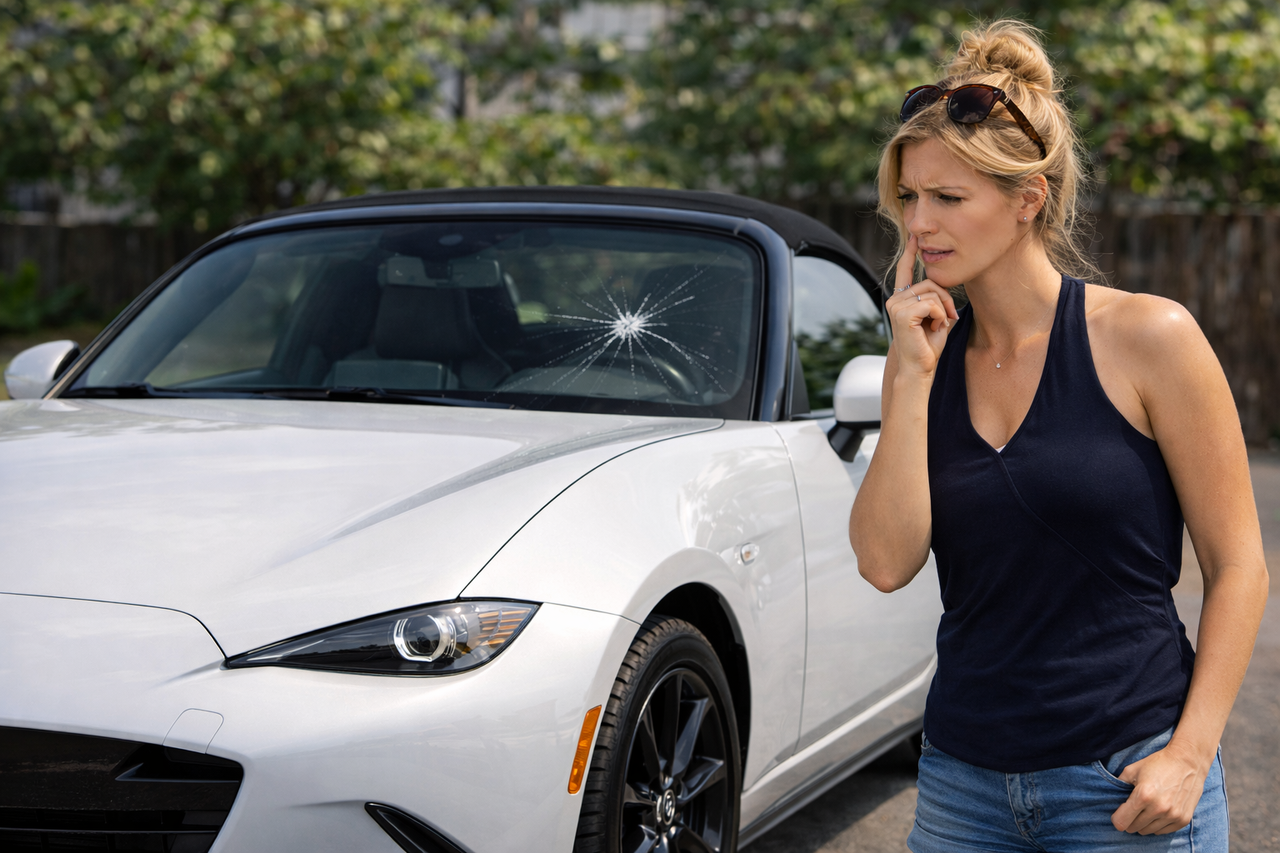
Windshield impacts typically start with one of three culprits. Gravel kicked by a tire leaves a small cone‑shaped chip with a dark center. A longer impact often turns into a star break with radiating cracks. Temperature swings after the hit convert both types into a crack that can snake several inches in either direction. On rural roads where surfaces change from asphalt to chip seal, debris is common and speed limits stay high, so the physics favors more aggressive damage. If the break is at the edge of the glass or within your wiper arc, expect it to spread faster.
Highways carry another risk: you cannot always pull off quickly or safely. The shoulder might be narrow. Trucks passing at 65 miles per hour create air pressure that rattles a weakened windshield. That vibration matters. What might have been a 15‑minute windshield repair in High Point at a shop turns into a time‑sensitive stabilization on site. On a winter night, when a front moves through and temperatures drop ten to fifteen degrees in an hour, the stress rise can take a small chip right past the point most techs consider repairable.
Side and rear glass respond differently. Laminated front glass holds together even when cracked, thanks to a plastic interlayer. Many side windows use tempered glass that shatters into small cubes. On a pitch‑dark county road, that kind of failure leaves you with an open window, an interior full of glass, and no way to secure the car. That is where mobile auto glass in High Point and the surrounding counties earns its keep, not just replacing glass but making a vehicle safe enough to continue home.
When to call for emergency help versus scheduling
Some situations can wait for a scheduled slot at a shop. Others call for emergency auto glass in High Point and the nearest tech who can reach you on the shoulder.
- Immediate emergency: a crack obstructing your view in the driver’s side sweep, glass that is actively spreading, a shattered side window, or any damage combined with rain, sleet, or night driving. If you cannot see well enough to react within two seconds at speed, it is an emergency. Urgent but not critical: a stable chip smaller than a dime, out of your line of sight, that has not changed in 24 hours. You still want same day auto glass in High Point if possible, because each bump and thermal cycle raises the odds of a spread. Shop visit works fine: cosmetic chips outside the wiper arc that have been stable for a few days, or post‑storm replacements when the car is already parked and covered.
Those lines help dispatchers prioritize. In practice, crews balance safety, daylight left, and traffic. If you are on I‑85 at rush hour, a dispatcher might route you to the next exit or safe lot before sending a mobile van. The goal is to combine speed with control, not to be the fastest to an unsafe shoulder.
How mobile response actually works on rural and highway calls
From the outside it looks simple. You call, a tech arrives, the problem is solved. The reality is more methodical. When a call comes in, the coordinator checks four things before committing a truck: your precise location, the type of glass needed, the vehicle’s ADAS features, and the weather window.
Location is more than a road name. Mile markers, exit numbers, and landmarks help. If you are on Highway 62 near a farm stand, a pin drop or a description like two miles past the county line saves time. The difference between northbound and southbound matters when a van is approaching from the opposite side with a median barrier in the way.
Glass type dictates what the van carries. Windshield replacement in High Point for a 2015 sedan might be straightforward. A late‑model SUV with a heated windshield, acoustic layer, humidity sensor, and a camera bracket changes inventory needs. Car window replacement in High Point runs faster when techs know if you have privacy glass or a tint shade to match. Mobile teams stock common parts and know which warehouses can run a quick hand‑off if needed. After hours, they might use a temporary seal to secure the opening and return at first light with the exact part.
ADAS, the driver‑assist systems built into many windshields, adds a calibration step. Forward cameras and sensors must be aligned after a new windshield goes in. Some calibrations can be done with a mobile setup in a level lot, others require a shop with targets and controlled lighting. A good mobile auto glass High Point provider will not guess. They will repair on site if it is a small chip, or replace and schedule calibration the next morning at the shop while securing the vehicle in the meantime. The right call depends on the car and conditions.
Weather closes or opens windows of work. Resin used for windshield repair in High Point cures best within a temperature band, and adhesives for full replacements need dry, clean surfaces followed by safe drive‑away time. During rain, techs use pop‑up canopies or postpone the install, focusing instead on temporary protection so you can travel or wait without further damage. In summer, the heat helps the cure but can accelerate crack growth, so arrival order can flip to the cases most likely to worsen in the next hour.
Repair versus replacement: the judgment call on the shoulder
The industry rule of thumb has stayed consistent for years. Chips under a quarter in size that are not in the driver’s critical view can be repaired. Short cracks under six inches can sometimes be repaired if they are not at the edge. Anything larger, anything that reaches the perimeter, or anything right in your sightline points to replacement. That guideline still holds, but highway and rural calls complicate it.
On a shoulder with traffic buffeting the car, a tech might stabilize a chip first with a probe, then tape, then move the car to a quieter spot before injecting resin. On older glass with pitting, the drill may need an extra touch to achieve a clean cone, or the resin may need a second pass to fully fill the air. The aim is not perfection under a microscope. It is structural integrity and clear optics from the driver’s position. When the damage is marginal for repair, and you are 20 miles from town at dusk, replacing the windshield right there is sometimes the safer call. It takes longer, and you will need a protected spot for adhesive cure time. But if the crack is radiating, a repair would only slow a failure, not prevent it.
For side windows, there is rarely a repair path. Tempered glass that has shattered needs replacement. The emergency measure is transparent film and tape to seal the opening, vacuum out debris, and ensure door functions are intact. Many mobile vans carry universal protective film for this reason, along with trim clips that tend to break on disassembly. Car window repair in High Point often means diagnosing a regulator failure rather than glass damage, usually on the older trucks that still dominate rural drives. The fix can be a quick cable track swap if the part is available. If it is not, a competent tech can secure the glass in a closed position so you are not stuck with an open door overnight.
Safety on the roadside: trade‑offs that matter
It is hard to overstate how much safety shapes every choice. A technician who has worked enough shoulders develops instincts. The vehicle’s angle relative to traffic, the wind direction, whether the guardrail leaves room to open a door, how far the jack points are from the fog line, all of that matters. The best dispatchers will suggest moving to the next exit or a wider pull‑off when possible. If the windshield is still intact and the driver can see, adding a strip of clear tape across a crack to slow contamination and driving half a mile to a safer lot is wise.
Night work is its own animal. Reflective cones and a flashing beacon help, but on a curve, they are not enough. If a tech recommends meeting at a lit gas station five minutes ahead instead of the blind shoulder where you called from, take the advice. That is not a delay, it is a safety net.
I have seen one exception worth naming. After a deer impact that leaves the windshield spidered and bowed, driving is off the table. The risk of collapse in a second hit is real. In that case, an emergency auto glass High Point team will either replace on site in a safe area or, if conditions are poor, coordinate a tow to their shop or your home. It is an extra step, but it keeps everyone safer.
Timeframes, adhesives, and what “same day” really means
People hear same day auto glass in High Point and expect a 30‑minute turnaround. Sometimes that happens. A chip repair takes 20 to 40 minutes, depending on cleaning, drilling, and cure time. A basic windshield replacement runs 60 to 90 minutes for install, plus adhesive cure time. Safe drive‑away time is not a marketing blurb. It is chemistry. Most urethanes need 30 to 60 minutes to reach minimal safety thresholds in ideal conditions, longer if temperatures are low or humidity is very high. On a damp winter evening, figure 60 to 120 minutes before the car can reenter highway speeds confidently. A careful tech will warn you about this and give a specific leave time. If you hear a blanket “you are good to go right away,” ask what adhesive they use and what the tested cure times are.
“Same day” also means scheduling within the calendar day, not the hour. Dispatchers watch traffic peaks and weather in real time. When calls stack after a storm blows gravel into lanes, they triage. The heavy hitters like windshield replacement in High Point for vehicles with ADAS often get routed to morning slots for in‑shop calibration. Meanwhile, the mobile team crushes chip repairs and side glass stabilization in the field. Expect honest windows with ranges, then accountability for arrival within those windows. That is what separates a pro from a phone bank.
Insurance, cost, and getting to yes without surprises
Most comprehensive auto policies in North Carolina cover windshield repair with no deductible, and many cover windshield replacement with a deductible that ranges from 100 to 500 dollars. Side glass typically falls under the same comprehensive coverage. The details vary, so have your policy number handy. A reputable high point auto glass provider will verify coverage and handle the claim while you are on the line, then bill the insurer directly. If you prefer to pay cash, ask for a quote that includes tax, moldings, and calibration if needed. Watch for add‑ons like disposal fees and mobile dispatch charges. Those are legitimate costs, but they should be disclosed up front.
For older vehicles without ADAS, aftermarket windshields from reputable manufacturers meet standards and keep costs down. For newer models with heads‑up displays or acoustic layers, OEM or OEM‑equivalent glass can prevent issues like ghosting or camera bracket misfits. You do not always need the dealership. Mobile auto glass in High Point can bring OEM parts to you if that is the right call. The trick is aligning the part choice with the vehicle’s needs, not brand loyalty or the cheapest option.
Calibration and the road test you should expect
After any windshield replacement on a vehicle with lane keep assist, adaptive cruise, or automatic emergency braking, the camera needs a calibration. There are two types: static, done in a controlled space with targets, and dynamic, done on the road following a specific pattern. Some cars require both. Skipping calibration is not just a warning label. It can misread lane markings or fail to trigger braking when it should. If your tech installs glass and does not discuss calibration, press pause.
Good teams in auto glass replacement in High Point will either bring a mobile rig for static calibration to a level lot or schedule you for a shop visit within 24 hours. They will explain what systems your vehicle has and how that affects the process. The road test after calibration matters too. A five‑ to ten‑mile drive at mixed speeds with clear lane markings allows the system to confirm alignment. You want a printout or a digital record of successful calibration, not just a “feels fine” thumbs up.
Rural specifics: dirt roads, farm gates, and weekend calls
High Point sits in a mixed zone. You can be in a downtown driveway at 3 p.m. and a gravel lane by 3:30. Rural work adds a few wrinkles. Dust on glass surfaces requires extra prep before resin injection or adhesive bonding. Techs carry mist bottles, lint‑free towels, and tack cloths for a reason. Park under a tree on a breezy day and dust returns in seconds. The smart move is to position the car with its nose into the wind, use a portable canopy, and keep surfaces covered until the moment of bonding.
Access is another factor. I have met techs rerouted by weight‑limited bridges and locked farm gates. If the car is behind a gate, and you cannot be there, plan a meet at the public road. It avoids backtracking delays that eat your service window. On weekends, parts availability tightens. Mobile teams still cover emergencies, but a rare windshield variant might not be in stock until Monday. In those cases, secure the vehicle. Side glass gets film and tape, interiors get vacuumed to prevent cuts, and windshields with long cracks get a safety check plus parking guidance away from full sun or deep cold to slow spread. It is not ideal, but it keeps you moving without compounding the damage.
What drivers can do in the first five minutes
Here is a short, field‑tested sequence that helps, especially on highways and rural roads.
- Assess safety and visibility. If you can see and steer clearly, signal and move to a safer spot with more space. If not, stop where you are and turn on hazards. Protect the damage. For chips or short cracks, place a small piece of clear tape over the impact point to keep moisture and dirt out. Do not press hard. Note your position. Grab the nearest mile marker, exit number, or landmark. A pin drop from your phone helps, but also say northbound or southbound. Call a provider that offers mobile auto glass in High Point and mention any sensors or features visible near the mirror. Ask about safe drive‑away time and calibration. Manage the cabin. Brush loose glass away from seats and floor with a glove or towel. If a side window is gone, remove big pieces only, then cover the opening from inside to limit wind pressure until the tech arrives.
These steps do not fix the glass. They buy time and make the eventual repair or replacement cleaner and safer.
Choosing a provider: signals that you are in good hands
Marketing copy does not keep you safe on a shoulder. Competence does. When you call, listen for specifics. If they ask for the VIN, they are tracking features. If they explain how adhesive cure time affects your leaving time, they respect physics. If they propose moving to a safer site before starting, that is experience talking. Reviews help, but pay attention to mentions of highway calls, rural response, and calibration outcomes. A shop that handles windshield repair in High Point every day can still struggle with a midnight call on US‑52 if they are not set up for fieldwork. Ask about their mobile equipment and how far they travel. A clear radius and a dispatcher who knows the roads are good signs.
Price should be transparent. So should warranties. A lifetime workmanship warranty on leaks and wind noise is standard among pros. Repair warranties are simpler: if a repaired chip spreads, a credit toward replacement is typical, often applying what you paid for the repair.
Aftercare: little habits that preserve your new glass
Once the glass is in and calibrated, treat it gently for the first day. Avoid car washes with high‑pressure jets. Do not slam doors. The pressure spike can stress fresh adhesive. Mobile auto glass High Point If the weather swings, park in a garage or a shaded spot if you can. Small choices make a measurable difference in the first 24 hours. For chip repairs, wait a few hours before washing and avoid harsh cleaners. The resin needs time to fully set. Watch the repaired spot over the next week. If you see creeping lines or tiny halos, call for a check. Most techs will swing by to inspect and, if needed, rework without charge.
For side glass, confirm that window auto‑up and pinch protection features still operate as expected after replacement. Minor adjustments to the regulator or weatherstrip can fix noisy seals if you report them early. If your car uses laminated side glass for sound insulation, make sure the part installed matches that spec.
Where High Point’s geography meets good service
High Point is not a monolith. It blends a furniture belt core with spokes that lead to small towns, farms, and a web of highways. That mix demands flexibility from auto glass services. high point auto glass is not just about a shop with clean bays, it is about trucks ready to roll, a parts network that moves, and technicians who make good calls when everything is a little harder than it would be on a flat, quiet lot.
When you hear claims about twenty‑minute everything, be skeptical. When you hear a thoughtful plan tailored to your spot on the map and the glass in your car, you have likely found the right fit. Emergency auto glass High Point providers live or die by how well they serve the edge cases, the night calls, and the rural pulls. If they do those well, the weekday shop appointments take care of themselves.
Final thoughts from the shoulder
If you drive the Triad’s highways and the rural routes that stitch them together, glass damage is not a question of if, but when. The difference between a costly, stressful episode and a controlled interruption often comes down to three things. First, your immediate choices, made calmly, with safety first. Second, a mobile team that knows the local roads and the realities of fieldwork. Third, the discipline to respect the small details like ADAS calibration and cure times that are easy to gloss over when you just want to get moving.
Highways reward preparation. Keep the number of a trusted provider who handles auto glass repair High Point and auto glass replacement High Point with equal confidence. Know your insurance basics. And if a chip shows up after a gravel truck sprays you on 311, do not wait. Early repair turns a potential replacement into a thirty‑minute detour. The roads around High Point are friendlier when you can see them clearly.